Pain modulation · PainScience commentary
Why We Rub a Bruise: Touch, Pain and Counterstimulation
Rubbing a bumped elbow is almost instinctive. Why can another sensation make pain less intense, at least briefly?
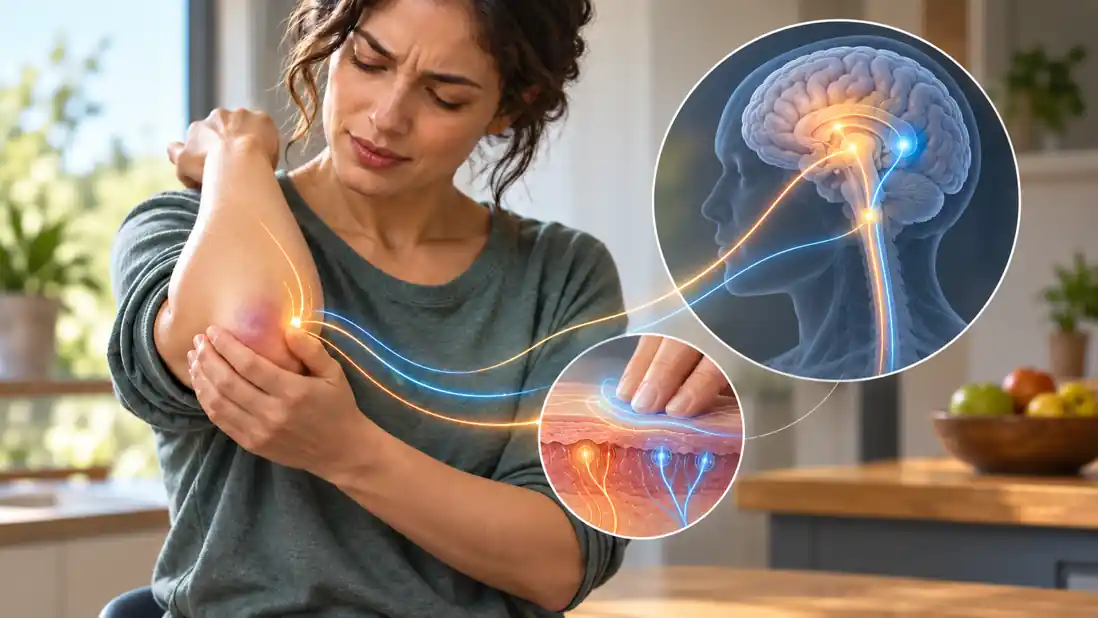
An independent introduction to an essay by Paul Ingraham, published on PainScience.com.
Why this matters
Counterstimulation and gate-control ideas offer part of the answer: incoming sensory information can influence pain processing. That does not mean every technique promoted with this vocabulary has a large, lasting or clinically meaningful effect.
Ingraham explores the small physiological insight behind a surprisingly big collection of therapeutic claims. His central question is worth keeping in mind: how far can we reasonably take a plausible mechanism?
Read the source
This is VesninMed's own commentary, not a reproduction or translation of Paul Ingraham's English essay. The original writing belongs to Paul Ingraham. For his complete argument, sources and possible updates, read the article on PainScience.com.
Original author: Paul Ingraham.