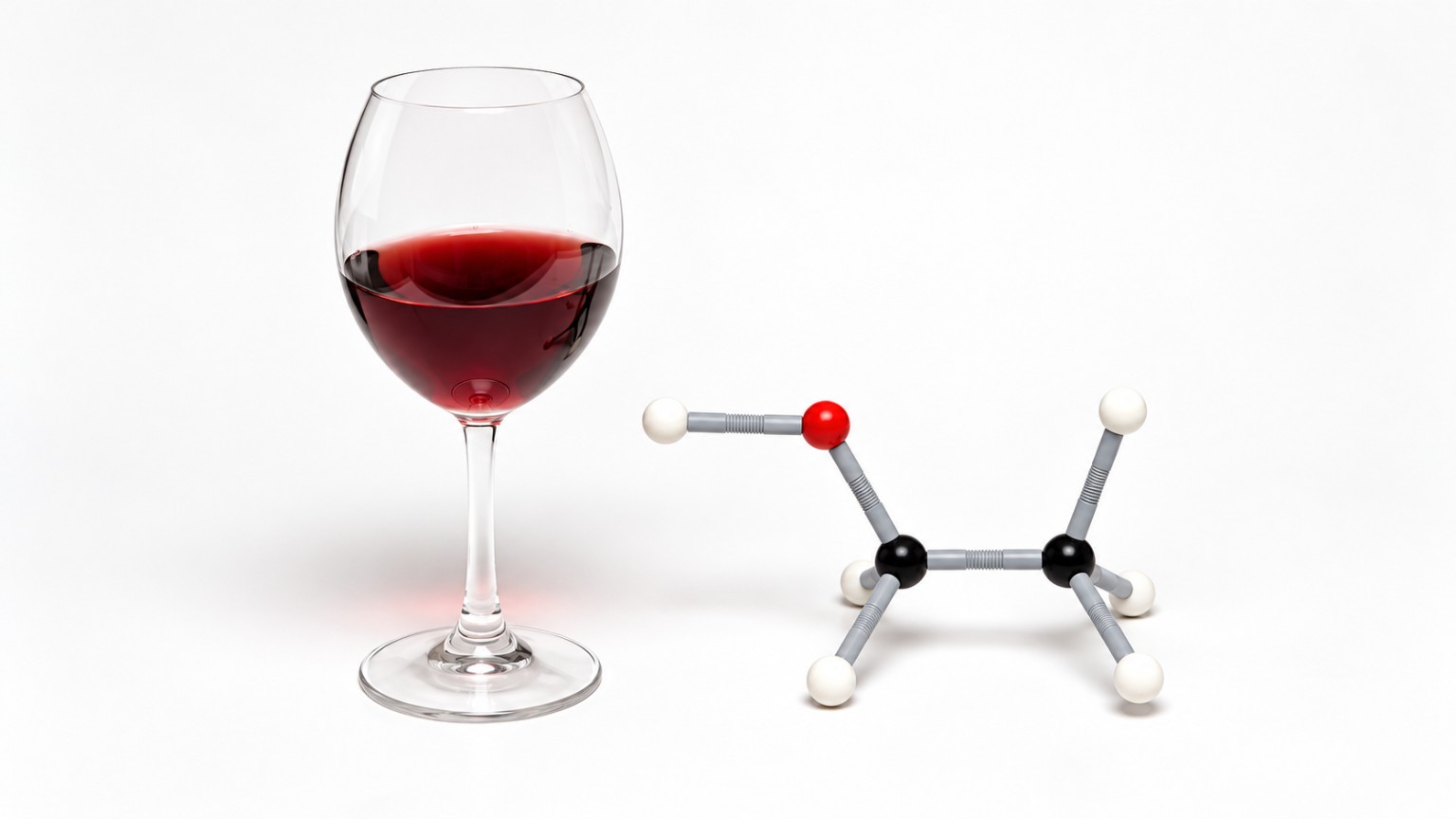
Wine “for the blood vessels”, brandy “for a cold”, beer “to relax”: familiar reasons people give for drinking. Behind each one is the same substance, ethanol. Let us examine what it does to the body and what research tells us about the associated health risks.
I once promised readers of my Telegram channel an article on the benefits of alcoholic drinks—then admitted there was little good news to report. Behind the joke lies a serious question: why did the idea that moderate drinking is healthy become so widespread? We will look at evidence on cancer, cardiovascular disease, ethanol's effects on the brain and the development of dependence.
The short answer: there is no good reason to start drinking for health benefits. For people who already drink, reducing consumption can lower some alcohol-related risks. A single glass does not mean that someone will inevitably become ill: population studies describe changes in probability, not an individual's destiny.
Ethanol: the same molecule in different drinks
Ethanol is rapidly absorbed from the digestive tract and acts on the central nervous system. A person may feel relaxed even as attention, coordination and danger assessment begin to deteriorate. They may feel more confident while their reactions are slowing. The World Health Organization describes ethanol as a toxic, psychoactive substance capable of causing dependence.
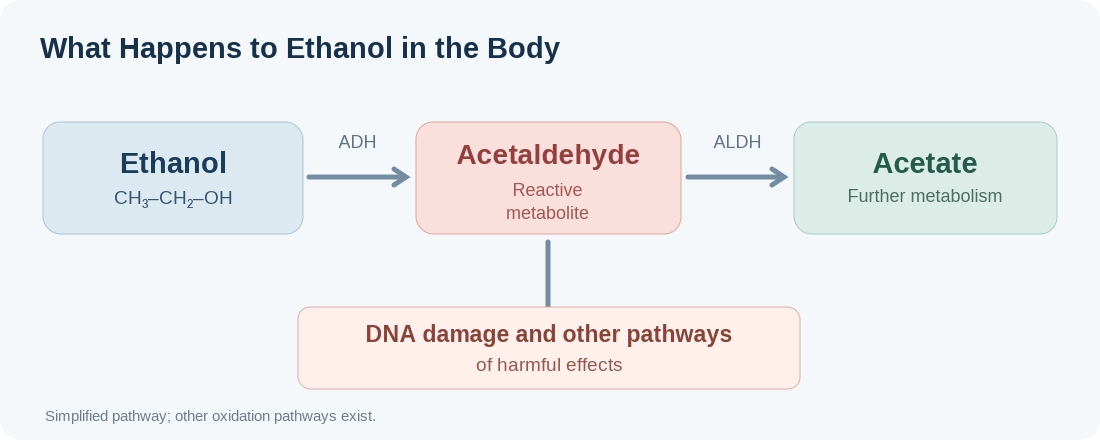
Acetaldehyde, produced during ethanol metabolism, can damage DNA. Researchers also investigate oxidative stress and changes to hormone regulation. These mechanisms help explain possible effects, while the magnitude of disease risk must be assessed in human studies.
What does alcohol do to red blood cells?
A red blood cell resembles a small biconcave disc about eight micrometres in diameter. Some capillaries are considerably narrower, so the cell must bend and deform to pass through. Researchers study how ethanol changes the cell's flexibility and membrane.
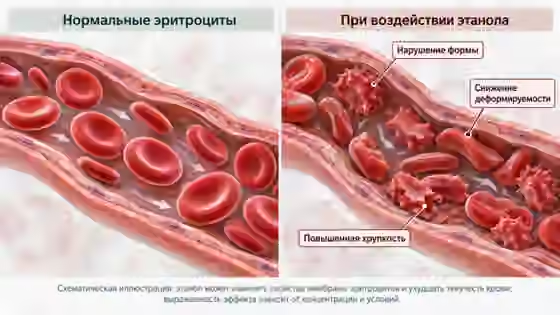
It is sometimes claimed online that alcohol simply makes red blood cells “stick together”. But shape, deformability, membrane stability and aggregation are distinct properties, and ethanol need not affect them in the same way. Some laboratory experiments have even observed increased deformability.
In 2015, Seung Yoon Lee and colleagues used three-dimensional imaging of human red blood cells exposed to ethanol concentrations of 0.1%, 0.3% and 0.5% by volume. At 0.1% and 0.3%, cells became somewhat rounder and their membranes fluctuated more, indicating changes in membrane mechanics. Lee et al., PLOS ONE, 2015 ↗
In 2013, Melda Sonmez and colleagues studied red cells exposed to different alcohols. At a 5% ethanol concentration, more than 80% of cells developed a spiky shape (echinocytes). Comparable changes were largely absent at lower concentrations. Five per cent is an extremely high laboratory concentration, incompatible with human survival if reached in the bloodstream. Sonmez et al., PLOS ONE, 2013 ↗
What would these amounts mean for vodka or wine?
To put the laboratory concentrations in context, the original Russian article included rough calculations for a 70 kg man. They are not a reliable way to predict a real person's blood alcohol concentration after drinking:
- 0.1%: roughly 120 mL of 40% vodka or 400 mL of 12% wine; about 38 g of ethanol (an illustrative estimate of approximately 0.8‰ blood alcohol).
- 0.3%: roughly 360 mL of 40% vodka or 1.2 L of 12% wine; about 113 g of ethanol (approximately 2.4‰ in this simplified model).
- 0.5%: roughly 600 mL of 40% vodka or 2 L of 12% wine; about 188 g of ethanol (approximately 3.9‰ in this simplified model).
These are comparisons of quantities, not instructions or predictions. Blood alcohol concentration varies with body composition, sex, food, drinking rate and time elapsed, including alcohol elimination. Blood alcohol levels approaching 0.4% are potentially fatal and can cause loss of consciousness and respiratory failure.
Experiments show that ethanol can affect red-cell properties. Whether—and how much—this changes tissue perfusion in living people requires separate clinical research. Laboratory images alone cannot answer that question.
Alcohol and cancer: the causal link is established
The International Agency for Research on Cancer (IARC) classifies the consumption of alcoholic beverages as carcinogenic to humans (Group 1). This classification describes the strength of evidence that something can cause cancer; it does not mean that all Group 1 agents are equally hazardous. Actual risk depends on the amount and duration of exposure, among other factors.
Alcohol causes cancers at at least seven sites: the oral cavity, pharynx, larynx, oesophagus, liver, colon and rectum, and female breast. In general, the more ethanol a person drinks over time, the higher their risk of alcohol-related cancer. At some sites, notably the breast, an increase in risk is observed even at relatively low consumption. WHO Europe, 2025 ↗
What does “no safe level” mean? Researchers have not established a consumption level at which any added carcinogenic risk can confidently be ruled out. At low consumption, the absolute increase in risk may be small, and its size depends on exposure and other circumstances.
Red wine is sometimes claimed to be healthier than spirits because it contains polyphenols. Those compounds are present, but so is ethanol. For many carcinogenic effects, the amount of ethanol is particularly important; neither the price nor the origin of a wine removes that exposure. Stopping drinking reduces the risk of some alcohol-related cancers over time, with strong evidence particularly for cancers of the mouth and oesophagus. IARC assessment ↗
What about the supposed benefits for the heart?
The idea of a “healthy glass” partly arose from observational studies in which people who drank small amounts sometimes had lower rates of certain cardiac conditions. Yet the groups also differed in diet, income, lifestyle and health status. Moreover, “non-drinkers” often included former drinkers who had stopped because of illness. Such differences can create the appearance of a protective effect.
Where did the claims about “good cholesterol” come from?
In 2011, Susan Brien and colleagues examined 63 experimental studies of blood markers following alcohol consumption, with data from 44 studies suitable for pooled analysis. On average, HDL cholesterol—the so-called “good” cholesterol—increased by 0.094 mmol/L, while fibrinogen, a protein involved in clotting, fell by 0.20 g/L. Other markers changed as well. Brien et al., BMJ, 2011 ↗
These were largely relatively short-term measurements of biomarkers. They did not establish that participants went on to experience fewer heart attacks, strokes or other diseases. Favourable changes in a marker alone are not proof that alcohol improves cardiovascular health.
In 2018, The Lancet published a pooled analysis of 599,912 current drinkers from 83 prospective studies. For each additional 100 g of ethanol per week, the reported relative risks changed approximately as follows:
| Outcome | Change in relative risk |
|---|---|
| Stroke | 14% higher |
| Heart failure | 9% higher |
| Myocardial infarction | 6% lower in the statistical model |
The heart-attack figure may appear reassuring. In the same study, however, higher alcohol consumption was associated with increased risks of stroke and heart failure. An observational association with fewer heart attacks is not by itself evidence of a protective effect. The analysis also did not assess the full range of injuries, dependence, liver disease and other consequences. Wood et al., 2018 ↗
Among current drinkers, the lowest observed overall mortality was around the category up to 100 g of ethanol per week. That is a result from a particular statistical analysis, not a recommendation to consume 100 g weekly or a safe threshold.
Blood pressure is another concern. A 2024 meta-analysis found that hypertension risk tended to rise with greater alcohol intake, although patterns differed between men and women. A value of 12 g per day discussed in that work should not be interpreted as a universal harmless limit. Meta-analysis, 2024 ↗
Do small amounts help people live longer? The 2023 meta-analysis
A 2023 analysis in JAMA Network Open pooled 107 cohort studies involving 4,838,825 participants, with 425,564 deaths during follow-up. The authors addressed a major problem in earlier comparisons: groups labelled “abstainers” often included people who had stopped drinking because of declining health.
After adjustments for this and other biases, they found no statistically significant reduction in all-cause mortality among people consuming relatively little alcohol (averaging 1.3–24 g of ethanol per day) compared with lifetime non-drinkers. Some higher consumption categories had increased risk. Zhao et al., 2023 ↗
These findings still come from observational studies and cannot determine the causal effect of every dose. Nevertheless, after accounting for known sources of bias, the claim that a daily drink extends life lacks convincing support.
Alcohol abstinence and atrial fibrillation: a randomised trial
An Australian randomised trial enrolled 140 patients with atrial fibrillation who regularly drank alcohol. One group was encouraged to abstain; controls largely continued their usual consumption. Over six months, recurrent atrial fibrillation occurred in 53% of the abstinence group and 73% of controls.
In patients resembling those enrolled, substantially reducing alcohol may lower the chance of recurrent atrial fibrillation. This is encouraging, but the result should not be assumed to apply to every patient. Decisions about arrhythmia treatment and prescribed medicines should be made with a clinician. Voskoboinik et al., NEJM, 2020 ↗
The liver, pancreas and intestines
Long-term heavy drinking can damage the liver, causing fatty liver disease, alcohol-associated hepatitis, fibrosis and cirrhosis and increasing the risk of liver cancer. Alcohol also raises the risk of acute and chronic pancreatitis. These disorders can cause pain, disrupt digestion and lead to serious complications.
Researchers are investigating how alcohol affects the intestinal microbiota and mucosal barrier, and how these changes relate to liver disease. Such studies cannot establish that a particular person has a damaged intestinal barrier. Drinking alone does not prove such damage or explain a complaint such as back pain. If someone has disturbed sleep, elevated blood pressure or digestive symptoms, their clinician needs to know how much and how often they drink, while investigating other possible causes.
The brain, pleasure and dependence
Why do people continue drinking despite knowing the risks? One reason is that its effects can feel pleasant: relaxation, reduced tension and greater social ease. Ethanol influences inhibitory and excitatory signalling in the brain, including GABA and glutamate systems, and circuits involved in pleasure, motivation and habit formation.
Regular drinking may lead to tolerance, so a familiar dose feels weaker. Some people develop alcohol dependence and need professional support. There are also immediate risks: intoxication impairs coordination and judgment, increasing the likelihood of falls, road accidents and other injuries.
When is abrupt cessation dangerous? Someone who has been drinking heavily every day for a long time and already experiences withdrawal symptoms—tremor, sweating, palpitations or marked anxiety—may be at risk if they suddenly stop without medical care. Seizures, hallucinations or confusion require urgent assessment. NIAAA ↗
In my original discussion, I compared withdrawal syndromes from different substances. Severe alcohol withdrawal can be immediately life-threatening, involving seizures, delirium and major autonomic disturbances. Opioid withdrawal, including heroin withdrawal, is generally extremely distressing but less often fatal in itself. Opioid dependence still carries major risks from overdose and infections. After abstinence, tolerance falls and a return to a previous dose can cause fatal overdose. This comparison concerns withdrawal only; it cannot establish which substance is more harmful overall. Merck Manual: alcohol ↗; opioids ↗.
Why did alcohol rank above heroin in David Nutt's study?
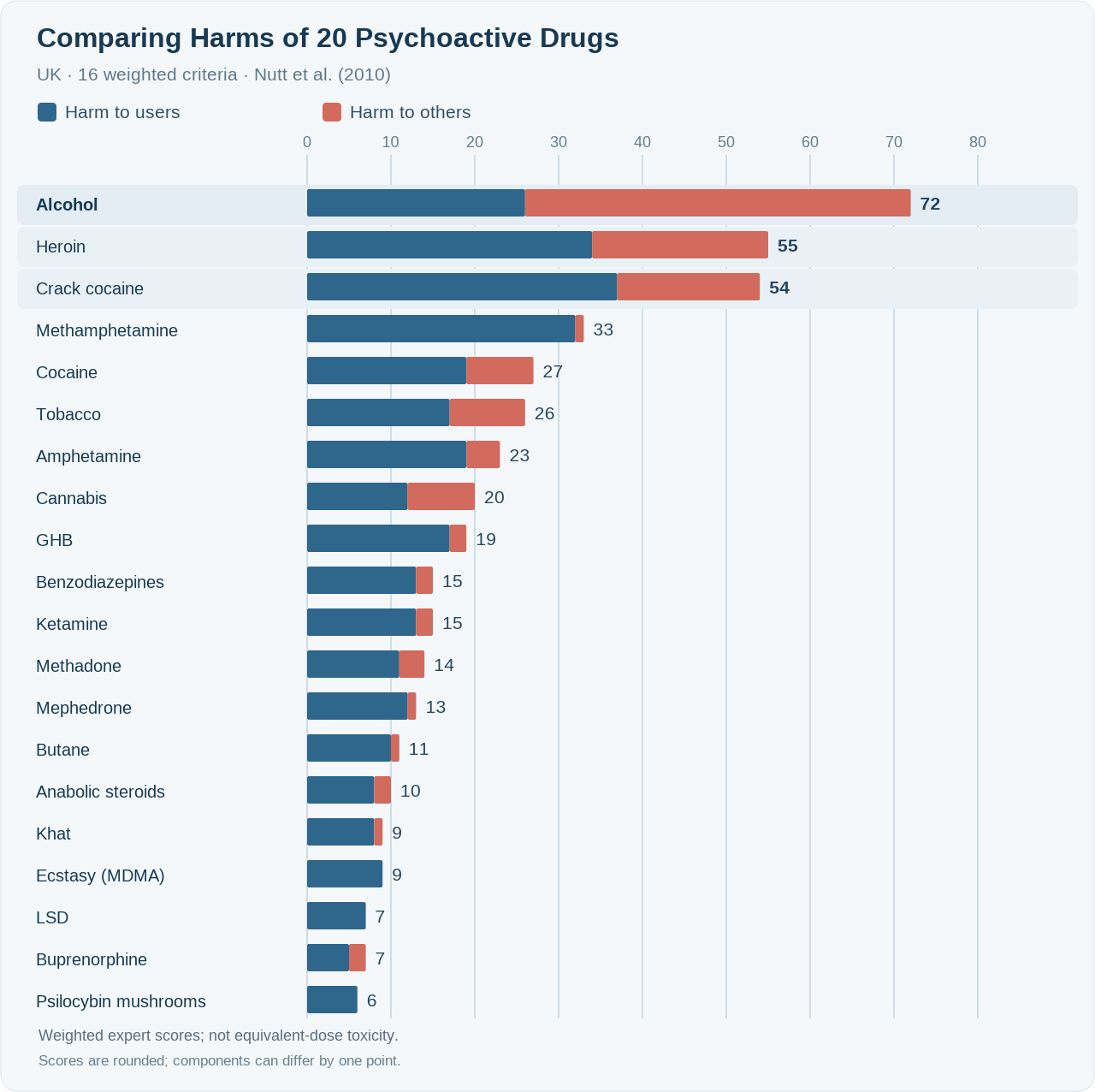
In 2010, a panel led by neuropsychopharmacologist David Nutt compared 20 psychoactive drugs using 16 weighted harm criteria. Nine concerned harm to users, and seven harm to other people. The assessment included health effects, dependence, injury and social and family consequences.
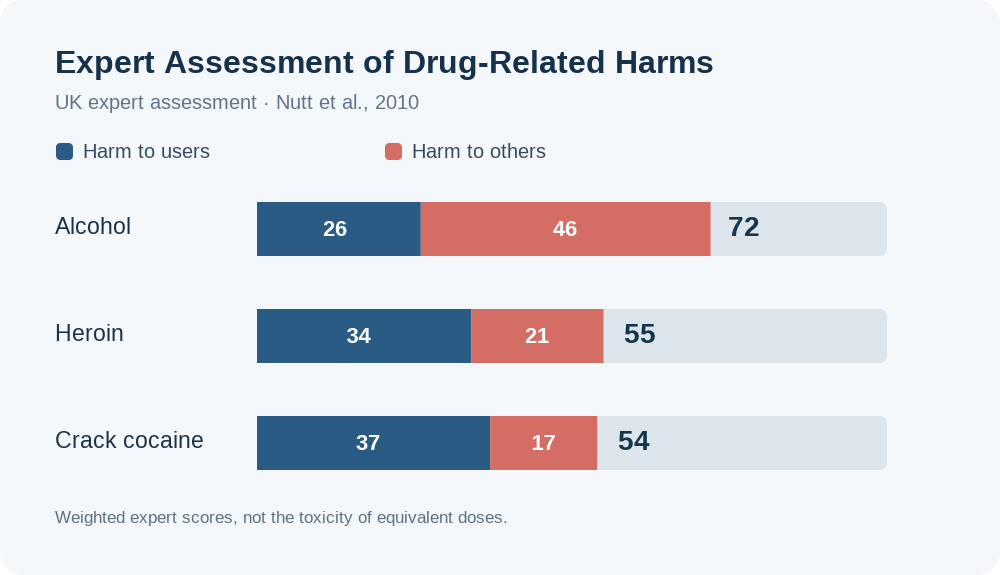
Alcohol scored 72 points, heroin 55 and crack cocaine 54. The result can be surprising because legal status is often mistaken for low risk. Alcohol's high overall score partly reflects harm to others and the scale of its use. This chart does not show whether a glass of wine or a dose of heroin is more dangerous to one individual. The panel applied specified weights to criteria in the UK context of 2010. The ranking illuminates population-level harms; it cannot replace an assessment of an individual's risks.
What is “one drink”?
Countries define a standard drink differently. It is often more informative to calculate the grams of pure alcohol in a particular glass or bottle. For example:
- 14.2 g: 150 mL of wine at 12% alcohol by volume.
- 19.7 g: 500 mL of beer at 5%.
- 15.8 g: 50 mL of spirits at 40%.
“A glass” and “a shot” are imprecise quantities: drinks with the same volume may contain different amounts of ethanol. Consumption per occasion, frequency and cumulative intake all matter when considering health risks.
2.6 million deaths: understanding WHO estimates
According to WHO estimates, about 2.6 million deaths worldwide in 2019 were attributable to alcohol—4.7% of all deaths. This included roughly 1.6 million deaths from noncommunicable diseases, 700,000 from injuries and 300,000 from infectious diseases. For comparison, WHO attributed approximately 600,000 deaths to psychoactive drug use in the same year. These estimates were presented on 25 June 2024. WHO announcement ↗
These are population-wide totals, strongly influenced by how common use of each substance is. They cannot be used to infer the relative danger of particular doses of alcohol and heroin.
What should we do with this information?
Alcoholic drinks are part of food culture, traditions and social life. People drink for many reasons, including flavour and pleasant sensations. None of this provides a medical basis for recommending alcohol as a way to improve health.
People who do not drink need not start for the sake of preventing heart disease or “improving circulation”. Those who do drink can reduce risk by consuming less and avoiding episodes of heavy intoxication. Alcohol should be avoided before driving, hazardous work or any task requiring rapid reactions, and during pregnancy. Loss of control over drinking or withdrawal symptoms warrant professional help.
I will keep the original title's provocative spirit: On the health benefits of alcohol—unfortunately, there is little to say. Alcohol may taste good or feel enjoyable, but contemporary research does not provide convincing medical reasons to drink for health.
Scientific references
- WHO. Alcohol (2024). Health, dependence and population burden.
- WHO Europe. Alcohol and cancer (2025). Causal evidence for seven cancer sites.
- IARC. Reduction or cessation of alcohol consumption. Carcinogenic effects and risk reduction.
- Wood, A. M., et al. (2018). Risk thresholds for alcohol consumption. The Lancet.
- Alcohol intake and risk of hypertension (2024). Meta-analysis.
- Voskoboinik, A., et al. (2020). Alcohol abstinence in drinkers with atrial fibrillation. NEJM.
- Nutt, D. J., King, L. A., & Phillips, L. D. (2010). Drug harms in the UK. The Lancet.
- Brien, S. E., et al. (2011). Alcohol consumption and coronary heart disease biomarkers. BMJ.
- Zhao, J., et al. (2023). Daily alcohol intake and all-cause mortality. JAMA Network Open.
- Lee, S. Y., et al. (2015). Ethanol and human red blood cells. PLOS ONE.
- Sonmez, M., et al. (2013). Alcohols and red blood cell mechanical properties. PLOS ONE.
- WHO (25 June 2024). Global deaths attributable to alcohol and drug use.
- Drug Science. Multicriteria analysis of drug and alcohol harms in the UK.
- Merck Manual. Alcohol toxicity and withdrawal; Opioid toxicity and withdrawal.
About this English edition. A complete translation of Sergey Vesnin's expanded Russian article, based on an earlier Telegram publication ↗. The diagrams were prepared by VesninMed. Research findings are presented with their study limitations. Read the Russian original.